
Most merchants searching for a WooCommerce loyalty program do exactly the same thing: they type "best WooCommerce loyalty plugin" into Google, open the top three results, and install whichever plugin has the most stars. That process feels reasonable until the plugin is live and the gaps start showing up, missing integrations appear, the customer dashboard looks nothing like the rest of the store, or a pricing structure doubles the bill when order volume grows.
Instead of ranking plugins by feature count, this comparison sorts them by store growth stage and exposes the hidden costs that polished feature lists never mention. A merchant running 500 orders per month and one running 20,000 orders per month aren't the same audience. They shouldn't be reading the same recommendation. If you have already installed a plugin that looked great on paper but created unexpected problems in practice, you already know why that distinction matters.
What to look for in a WooCommerce loyalty program before you compare plugins
Before reading any feature list, there are four criteria that actually determine whether a loyalty plugin will work for your store over the next two years.
 Evaluating loyalty program fit before committing to a plugin
The first criterion is reward flexibility. Points-for-purchase is the most basic model, and most plugins offer it. But stores that want to run tiered rewards, cashback structures, or milestone bonuses need to confirm that flexibility exists before committing. The second criterion is integration depth with tools you already use, specifically your email platform, CRM, and any subscription plugins. A loyalty program that can't send reward notifications through Klaviyo or Mailchimp is missing its most important activation channel. You will feel that gap within the first 60 days. Third is scalability, meaning how the plugin behaves and what it costs when your order volume doubles. Fourth is support quality, because loyalty programs require configuration decisions that documentation alone rarely answers.
WooCommerce itself has no built-in loyalty engine, so every plugin is building reward logic on top of the same WooCommerce foundation. How cleanly they do that determines long-term reliability, especially through major WooCommerce version updates.
The most useful lens for this decision is what we call loyalty program fit by growth stage. Early-stage stores under 500 orders per month need simplicity and low upfront cost above everything else. Mid-size stores between 500 and 5,000 orders per month need automation, email integration, and some form of segmentation. Purchase frequency is where the real retention gains live at that scale. High-volume stores above 5,000 orders per month need API access, advanced reporting, and dedicated support that can respond in hours rather than days.
A store using WooCommerce Subscriptions is a good example of why this framework matters. It needs a loyalty plugin that explicitly supports recurring order rewards, with logic that recognizes the difference between a one-time purchase and an active subscriber. Many popular plugins don't handle that distinction. That gap only becomes obvious after setup is complete, when the developer hours are already spent.
Top WooCommerce loyalty plugins compared: features, pricing, and integrations
Four plugins dominate most shortlists for WooCommerce stores, and each one makes sense in a different context.
 Comparing WooCommerce loyalty plugins on features, pricing, and integrations
WooCommerce Points and Rewards (the official extension from WooCommerce.com) offers a clean points-for-purchase model that integrates directly with the WooCommerce admin. Setup is relatively fast, and the interface is familiar to anyone already managing products in WooCommerce. But the plugin stops short of referral program functionality, has no tier logic, and the reporting dashboard covers only the basics. It tends to work well as a starting point for stores under 300 orders per month that want something stable and maintainable without outside developer help. Growing stores usually hit its ceiling within 12 months.
YITH WooCommerce Points and Rewards extends the basic model with more earning rule options and some redemption flexibility. The annual license runs around $180 per year, which is reasonable. YITH also has a broad plugin ecosystem, which helps if you are already using other YITH extensions. The limitations show up in the customer-facing experience, which can require template customization to look polished. Email integration isn't native for most platforms. Referral support is sold as a separate YITH plugin, so the real cost of a full loyalty-plus-referral stack is higher than the headline price suggests.
WPLoyalty is the most recent entrant among widely used options and offers a cleaner UI than most WooCommerce-native plugins. It supports more earning actions out of the box, including account creation, social sharing, and reviews, and the pricing is also competitive. The integration story is still maturing, though. Connecting it to your email platform often requires a third-party automation tool like Zapier rather than a native connection. Stores that prioritize a modern interface and don't have complex email automation needs will find it a reasonable choice.
Rather than a WooCommerce add-on built around a points counter, Beans is a loyalty and referral platform that connects to WooCommerce as one of its supported channels. That distinction matters for stores that plan to grow. The reward logic, customer dashboard, and referral tracking are purpose-built rather than adapted from a simpler base. Native integrations with Klaviyo and Mailchimp, two-sided referral programs, and lifecycle-based automation are included rather than purchased separately.
Pricing structures differ enough to affect total cost significantly. WooCommerce Points and Rewards and YITH use annual license fees that do not change based on your order volume, and WPLoyalty uses a similar flat-fee model. Beans ties pricing to program engagement and store scale. A store growing from 500 to 5,000 active loyalty members will see costs adjust as the program delivers more value, rather than paying a flat fee regardless of whether the program is working. For stores with efficient program design and strong activation rates, that model tends to be more predictable in practice.
Beans for WooCommerce: what makes it different from native plugins
The core difference between Beans and the other options on this list is architectural. Native WooCommerce loyalty plugins start with WooCommerce's data structures and build reward logic on top. Beans was built as a loyalty and referral platform first, and WooCommerce is one of the commerce layers it connects to. That sequence matters in ways that aren't obvious from a feature list.
The referral program is where this shows up most clearly. Most WooCommerce plugins either skip referral functionality entirely or treat it as an add-on with limited logic. Beans includes two-sided referral incentives, meaning both the referrer and the new customer can receive rewards. It also includes shareable tracking links and fraud prevention that flags suspicious referral patterns automatically. For a DTC store where word-of-mouth acquisition is a real growth channel, that difference isn't minor. A referral program that rewards both sides consistently outperforms single-sided versions in activation rate and in the quality of customers it brings in.
Beyond referrals, Beans supports rewarding actions that native plugins usually ignore: account creation, product reviews, birthday engagement, and social sharing. Birthday rewards specifically tend to produce above-average redemption rates because customers actually expect something from the brand on that date. That timing feels relevant rather than promotional. Trigger-based reward emails send automatically based on customer lifecycle stage, which removes the manual work of identifying who to re-engage and when.
The automation layer is also where Beans connects to intelligent marketing in a way that plugin-based tools usually don't. Because Beans tracks program engagement at the customer level, it can surface which members are at risk of going inactive. It then gives your email platform the signals it needs to send a targeted win-back sequence before that customer churns, rather than after.
Beans pricing works on a subscription model tied to store scale. For stores expecting to grow order volume by 2x to 3x over the next 18 months, that structure is often more cost-efficient than paying annual plugin license fees while also paying a developer to maintain integrations that break with WooCommerce updates. We have seen stores where the real annual cost of a "cheap" plugin stack, once developer time is factored in, exceeds what Beans would have cost by a wide margin.
Which WooCommerce loyalty plugin fits your store size and goals
Three hundred orders per month or 3,000 orders per month changes everything about what a loyalty plugin needs to do.
For stores under 500 orders per month, simplicity and low upfront cost should dominate the decision. WooCommerce Points and Rewards or WPLoyalty are reasonable starting points. The feature ceiling will become visible eventually. But at this stage, getting a loyalty program live and building the habit of rewarding customers matters more than having advanced segmentation you won't use for 18 months. Over-investing in an enterprise-tier platform at this stage is a mistake we see often. It usually results in an underused program because the complexity discourages the store owner from actually running it.
For stores processing 500 to 5,000 orders per month, the calculus shifts. This is the range where customer retention starts to have a measurable impact on revenue. It is also where the gap between a basic points plugin and a full loyalty platform becomes expensive in practice. Automation and email integration are not nice-to-have features at this scale. They are what makes the difference between a loyalty program that runs in the background and one that actively drives repeat purchase. Beans is the right fit for most stores in this range, particularly those using Klaviyo or running any kind of subscription product.
Above 5,000 orders per month, API access, advanced reporting, and support responsiveness become non-negotiable. A loyalty program processing that volume generates enough customer data to inform broader retention strategy, but only if the reporting tools are capable of surfacing the right signals. Stores at this stage should avoid any plugin that can't export customer loyalty data to an external analytics tool or that lacks dedicated support with a real response time commitment.
The single most common mismatch we see is mid-size stores clinging to free or cheap plugins well past the point where the limitations are costing them revenue. A DTC supplement brand processing 3,000 orders per month needs automated win-back sequences and subscription loyalty support far more than it needs a beautifully designed points badge.
Setup complexity and hidden costs of WooCommerce loyalty plugins
Free doesn't mean cheap, and this is where most plugin comparisons go silent.
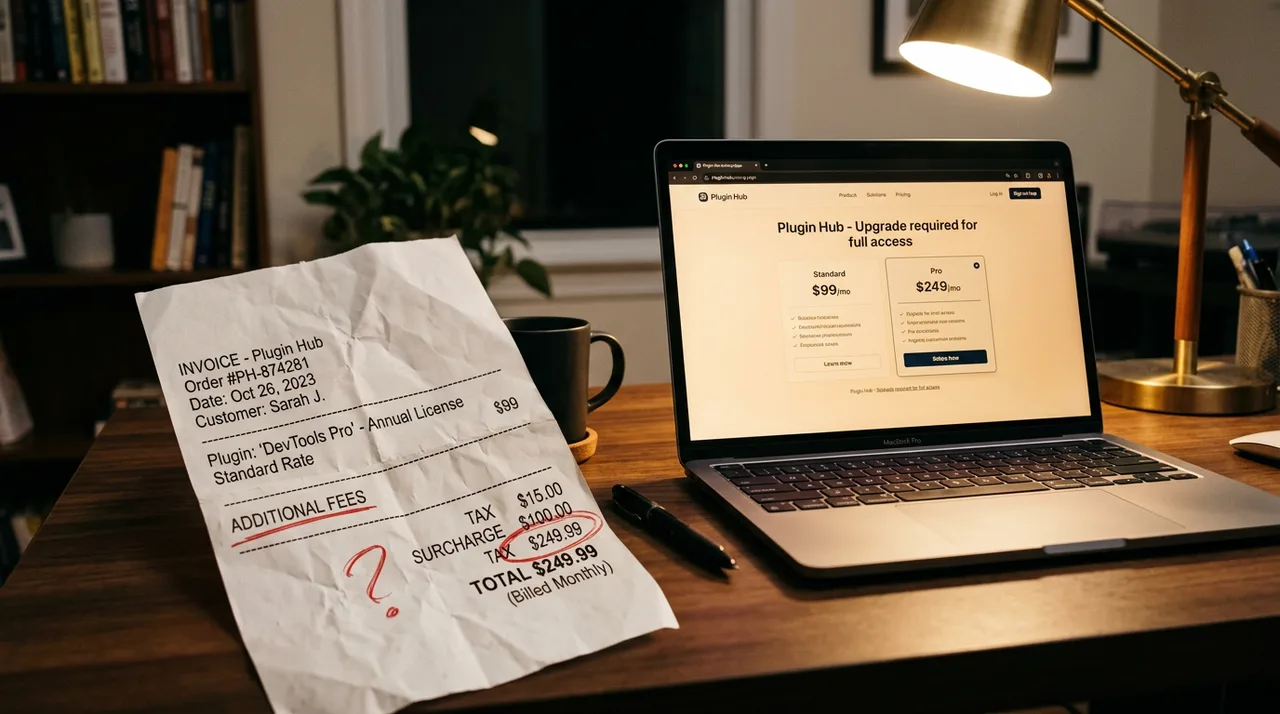 Hidden costs can surface quickly once a loyalty plugin goes live
A merchant who installs a free points plugin, spends 8 hours of developer time on custom styling and integration fixes, and then pays $150 for a separate referral plugin has already spent more than a mid-tier paid loyalty platform would have cost for the entire year. That math appears rarely in plugin reviews, but it is the math that actually determines what a loyalty program costs. Developer time in most markets runs $75 to $150 per hour, sometimes more for WooCommerce specialists. Custom work on a poorly documented plugin can take far longer than anyone quotes at the start.
Setup complexity varies across these plugins in ways that matter for stores without a dedicated developer. WooCommerce Points and Rewards and Beans both have reasonably fast setup paths. Most stores go live in under a day without custom code. YITH and WPLoyalty can require shortcode implementation, template overrides, and manual widget placement that adds time, particularly if the store theme doesn't play nicely with the plugin's default output. That work is manageable, but it is worth budgeting for honestly rather than assuming "installation" means "done."
The ongoing maintenance burden is also underestimated. Plugins that rely on WooCommerce core hooks can break when WooCommerce releases a major version update, and those updates arrive more often than most store owners expect. A plugin that hasn't been updated by its developer in six months is a liability, not a deal. Fast-growing ecommerce stores cannot afford downtime on a loyalty program that active customers are actively using. Checking the plugin's update frequency and support response times before installing is worth the 15 minutes it takes.
Customization of the customer-facing reward widget is another place where costs accumulate invisibly. The default styling of most WooCommerce loyalty plugins does not match a branded storefront without some CSS work. For stores running a custom theme or a page builder like Elementor, that work can escalate quickly. It is often the first thing that gets cut when budgets tighten, which means customers see a widget that looks out of place and trust the program less because of it.
How to make the final call on your WooCommerce loyalty program
Three questions, answered honestly, collapse most comparison grids to one or two real contenders.
First: what is your current order volume, and where do you realistically expect to be in 18 months? If you are at 400 orders per month now but expect to hit 2,000 by next year, you should choose based on where you are going, not where you are today. Migrating a loyalty program mid-growth is disruptive for customers and expensive in developer time. Customer lifetime value projections also become harder to trust when the program changes partway through. Second: which tools does this plugin need to integrate with on day one? If Klaviyo is your email platform and you run WooCommerce Subscriptions, your list of viable plugins is already short. Third: how much developer time can you realistically invest in setup and ongoing maintenance? Be honest here, because underestimating this is the most common reason loyalty programs underperform in the first six months.
For most WooCommerce stores in the mid-size range, and for any store that is serious about building loyalty that compounds over time, Beans is the platform we recommend. It handles the referral side and the loyalty side in one place. It connects natively to the email platforms where customer communication actually happens, and scales without requiring annual renegotiation of your plugin stack. The best place to start is to install the Beans WooCommerce plugin and run the setup with your actual store data, because the right woocommerce loyalty program is always the one that fits your store's specific growth trajectory, not the one with the longest feature list.